Nationwide study for CAA finds an average of 4.5 pedestrian-car near misses in school crossings every day
FrançaisOTTAWA, ON, Nov. 12, 2026 /CNW/ -- New research commissioned by the Canadian Automobile Association (CAA) has found an alarming average of 4.5 pedestrians a day are nearly being hit at crossings located on the way to school.
The research used video cameras and AI analysis to monitor 30 school crosswalks in 11 Canadian cities over five school days. Researchers recorded 660 total near misses during the short study period, meaning one in 84 crossing pedestrians was involved in a near collision with a vehicle.
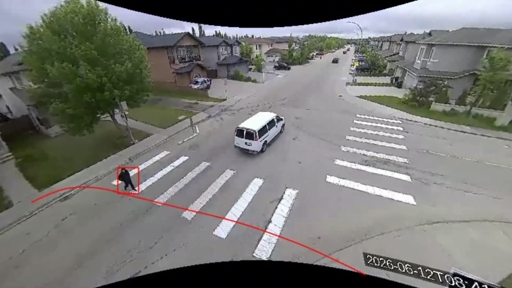
"CAA Clubs have been involved in programs to keep our kids safe on the way to school for decades. This study shows there is a lot of work still to do," said Ian Jack, Vice President of Public Affairs for CAA National. "This groundbreaking work not only shines a light on the ongoing danger but offers evidence of what can work to reduce risks."
The study found that, among the school-zone crossings studied, those that incorporated a traffic signal, stop sign or roundabout had a near-miss rate 20 times lower than those that did not. The study also reinforced research that has found that lower speed limits in school zones can reduce the instance of life-threatening injuries.
School-zone and reduced-speed-zone signage were also associated with fewer conflicts. Crossings without this signage had a 67 per cent higher overall conflict rate than those with it. The findings highlight the importance of examining crossing design, traffic controls and the hours during which safety measures are in effect.
The cities in the study, conducted for CAA by Miovision and Fireseeds North Infrastructure, were Vancouver, Calgary, Edmonton, Saskatoon, Regina, Winnipeg, Ottawa, Toronto, St. Catharines, Montreal and Halifax. The authors studied crosswalks along a mix of local, collector, and arterial roads. All of them were established travel routes to nearby schools selected by the participating municipalities.
"This work quantified for the first time ever in North America some of the effects of mitigating risk in school zones," said principal study author Craig Milligan of Fireseeds North Infrastructure. "Intelligent mobility solutions are gaining traction in cities across Canada. Paired with true AI analysis, they are identifying and analyzing issues faster than ever before, helping municipalities recommend and implement life-saving solutions sooner - in this case, for some of our most vulnerable pedestrians."
The research also found that school-crossing safety concerns extend beyond traditional school hours. While 242 combined incidents were noted between 7-9 a.m. and 3-5 p.m., traditional school start and end times, the single highest number of incidents, 94, occurred between 5 and 6 pm. This shows school zones are busy parts of communities even outside normal school hours, as many people use school playgrounds, fields and buildings.
Among the other findings, zebra markings at crosswalks resulted in 56% fewer left- and right-turn near misses, and near misses were more than two times as likely when vehicles were exiting intersections than when entering them. Also, pedestrians using crossings without signs flagging reduced speed limits were 67% more likely to be involved in a near miss.
The full study can be found here.
CAA
CAA is a federation of eight Clubs providing nearly 8 million Members with exceptional emergency roadside service, complete automotive and travel services, Member savings and comprehensive insurance services. As one of Canada's most trusted brands, CAA also advocates on issues of concern to its Members and all Canadians, including road safety, the environment, mobility, infrastructure, and consumer protection.
Miovision
Miovision, a global leader in intelligent mobility for 20 years, provides cities with modern tools to fix today's traffic problems, helping over 5,000 customers in 68 countries. With technology that has detected more than 77 billion vehicles and 3 billion pedestrians and cyclists, Miovision provides cities with the insights and tools they need to manage traffic proactively. By shifting from reactive to data-driven traffic management, Miovision empowers communities to design smarter, safer, and more efficient streets for all road users.
Fireseeds North Infrastructure
Fireseeds North Infrastructure is a specialized road safety engineering firm based in Winnipeg that conducts road safety audits and road safety research globally.
SOURCE Canadian Automobile Association

Media Contact(s): CAA National, Murielle Pierre, Manager, Public Affairs, [email protected]; Miovision (CASACOM), Madhuri Jacob, PR Consultant, [email protected]
Partager cet article