Why Small Stories Make a Big Impact in Climate Storytelling
- SmallRig-invited creator Suzanne Aline Merrett highlights the human side of climate change at COP31 in Antalya
ANTALYA, Türkiye, Nov. 25, 2026 /CNW/ -- Stories about nature and climate are everywhere, but many of the most powerful narratives come from people closely connected to a place, community, or way of life. At the Global Climate Film and Television Creators Exchange hosted by imaging-gear brand SmallRig in Antalya, Türkiye, on November 12, documentary filmmaker Suzanne Aline Merrett shared how local stories can inspire understanding and action.
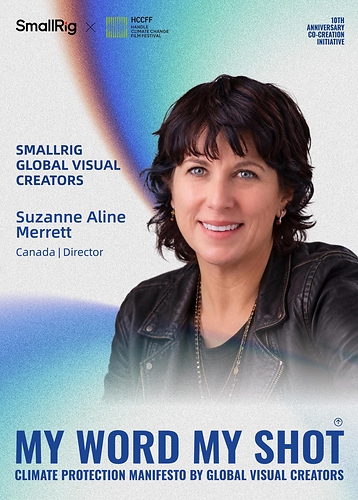
Merrett noted that climate change is not an abstract concept for farmers. It is a daily reality that influences decisions, livelihoods, and future generations. Through curiosity, active listening, and open-ended conversations, she has built a filmmaking approach centered on allowing people to tell their own stories rather than fitting them into predetermined narratives.
One example is the "Manitoba Protein Advantage Strategy," a collaborative initiative designed to advance sustainable agriculture. Through documentary-style video content, the project connected industry, academia, researchers, and producers while making complex topics around innovation and sustainability more accessible to the public. The experience also deepened Merrett's interest in the people behind agricultural transformation and inspired further storytelling efforts.
That journey led to "Women Farming Voices," an ongoing series highlighting Canadian women in agriculture who are embracing innovation, technology, and sustainable practices while adapting to climate-related challenges. By documenting their experiences, the project focuses on female farmers who are expanding agricultural opportunities, supporting future generations, and redefining leadership within the sector.
Merrett also reflected on her transition from photography to filmmaking. While a photograph can capture a moment, film preserves the conversations, wisdom, and experiences shared between those moments, allowing stories to reach and influence wider audiences.
Another key element of her approach is creating short-form content designed for classrooms, communities, and industry discussions. Each project is guided by a simple question: what can viewers learn from the story?
For Merrett, the power of climate storytelling lies in everyday experiences. By documenting the perspectives of farmers, researchers, and rural communities, storytellers can reveal how people are adapting to a changing world. The perspective closely aligns with the purpose of SmallRig's Global Climate Film and Television Creators Exchange: bringing together diverse creators whose collective stories help form a more complete and vibrant picture of nature, climate, and human resilience.
SOURCE SmallRig

Joey Zeng, [email protected]
Partager cet article